Disclosure: As an Amazon Associate, I earn from qualifying purchases at no additional cost to you.
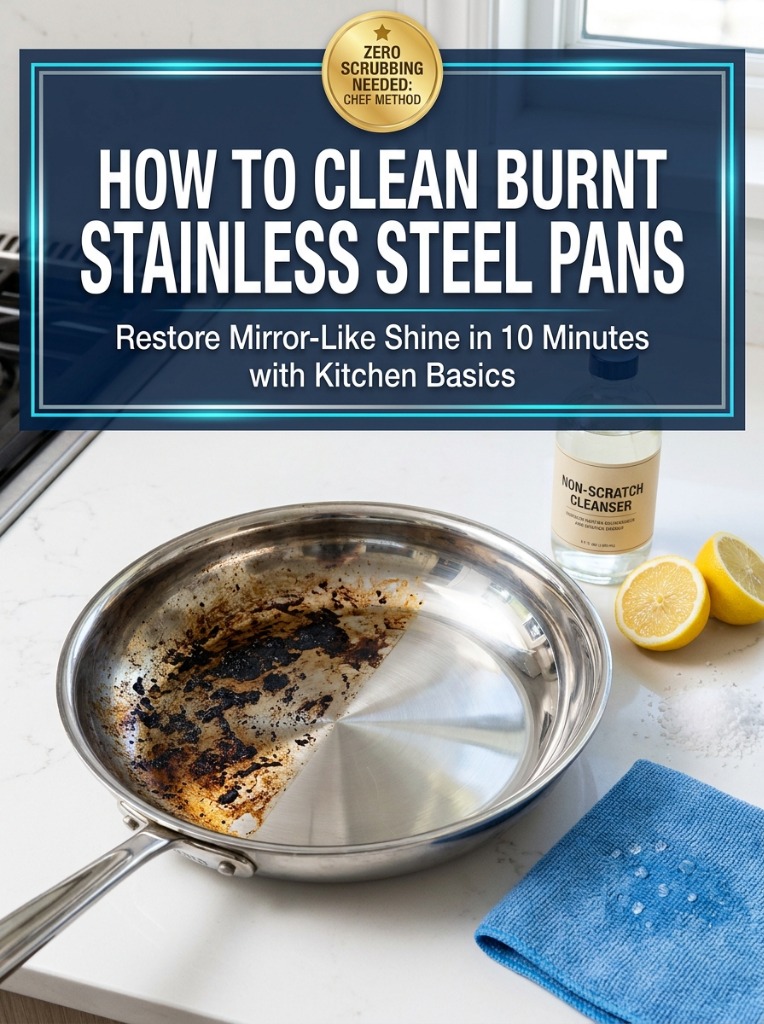
Every passionate cook has stared in horror at a beloved All-Clad or Tri-Ply stainless steel skillet blackened with stubborn, baked-on carbonized grease after searing steaks or reducing sauces. You soak it overnight with blue dish soap, scrub until your shoulders burn, and awake the next morning to discover the black crust laughing right back at you.
Stop destroying your arms with steel wool! Ordinary dish soaps cannot break down polymerized oil resins because cooking oils chemically bind to microscopic pores in stainless steel under high heat. In commercial restaurant sculleries, chefs rely on simple chemical dissolution: combining heat, acid, and mild abrasive cleaners to lift scorched crusts in under 10 minutes with zero elbow grease.
Save this pin to your favorite Pinterest Kitchen Cleaning Hacks & Care Board!
The 3-Tier Professional Cleaning Protocol
Method 1: The Boiling Vinegar Deglaze (For Medium Burns)
Pour equal parts water and distilled white vinegar into the burnt pan (enough to submerge the scorched bottom). Place the pan on your stove and bring to a rolling boil. Simmer for 5 minutes. As the acid heats up, you will literally watch black sheets of carbon float right off the bottom of the pan. Remove from heat, pour out liquid, and wipe clean with a sponge.
Method 2: The Bar Keepers Friend Oxalic Paste (For Severe Black Crust)
For pans that have survived campfire-level scorches or decades of baked-on brown oil glaze: wet the pan with warm water. Shake a generous dusting of Bar Keepers Friend across the surface. Use a damp non-scratch sponge to work the powder into a thick paste. Let it sit for exactly 60 seconds (no longer, to protect the chromium oxide layer). Buff gently in circular motions, rinse with warm water, and towel dry immediately.
Method 3: The Baking Soda & Hydrogen Peroxide Bath (Zero Fumes)
Mix 1/2 cup baking soda with enough 3% hydrogen peroxide to form a spreadable paste. Slather across the burnt areas and let the bubbling oxygen reaction loosen carbon for 30 minutes. Wipe clean with warm water.
Essential Cleaning Supplies
1. Bar Keepers Friend Cleanser & Polish (The Chef’s Miracle Cleanser)
Oxalic acid based formula that chemically dissolves baked-on polymerized oils, heat tint rainbows, and carbonized black grease without scratching surgical grade stainless steel.
2. Scotch-Brite Non-Scratch Scrub Sponges (6-Pack)
Specially engineered scrubbing fibers lift stubborn food particles without etching or stripping polished stainless steel surfaces.
3. Heinz All-Natural Distilled White Vinegar (1 Gallon)
Mild 5% acidity breaks down calcium mineral scale, heat bloom, and stubborn fond when simmered with water on the stovetop.
Chef Leo’s 3 Things You Must NEVER Do to Stainless Steel
- Never Use Bleach or Chlorine Cleaners: Chlorine permanently pits and erodes surgical stainless steel, leaving rust spots that destroy the pan’s smooth glide.
- Never Use Wire Wool (Brillo Pads) on Polished Surfaces: Steel wool leaves micro-scratches that trap food and ruin mirror finishes.
- Never Submerge a Hot Pan in Cold Water: Thermal shock warps heavy clad bases, creating uneven wobbling pans that cook hot spots.
Frequently Asked Questions (FAQ)
What causes rainbow-colored stains on stainless steel?
Rainbow discoloration (known as “heat tint”) occurs when chromium in the steel oxidizes at high temperatures. It is completely harmless and disappears in seconds when wiped with a splash of white vinegar.
How do I remove white cloudy mineral spots?
White cloudy rings are calcium deposits from tap water. Swirl 2 tablespoons of white vinegar or lemon juice around the dry pan, rinse, and towel dry.