As an Amazon Associate FreshKitchenBox earns from qualifying purchases. Find all knife skills and maintenance guides on Freshkitchenbox.com.
You can spend $300 on a handcrafted Japanese chef knife with ultra-hard VG-10 or Damascus steel, but if you chop on hard bamboo, glass, or plastic boards, that pristine edge will roll and dull in a matter of days. To preserve a razor-sharp edge, professional chefs rely exclusively on thick end-grain hardwood cutting boards.
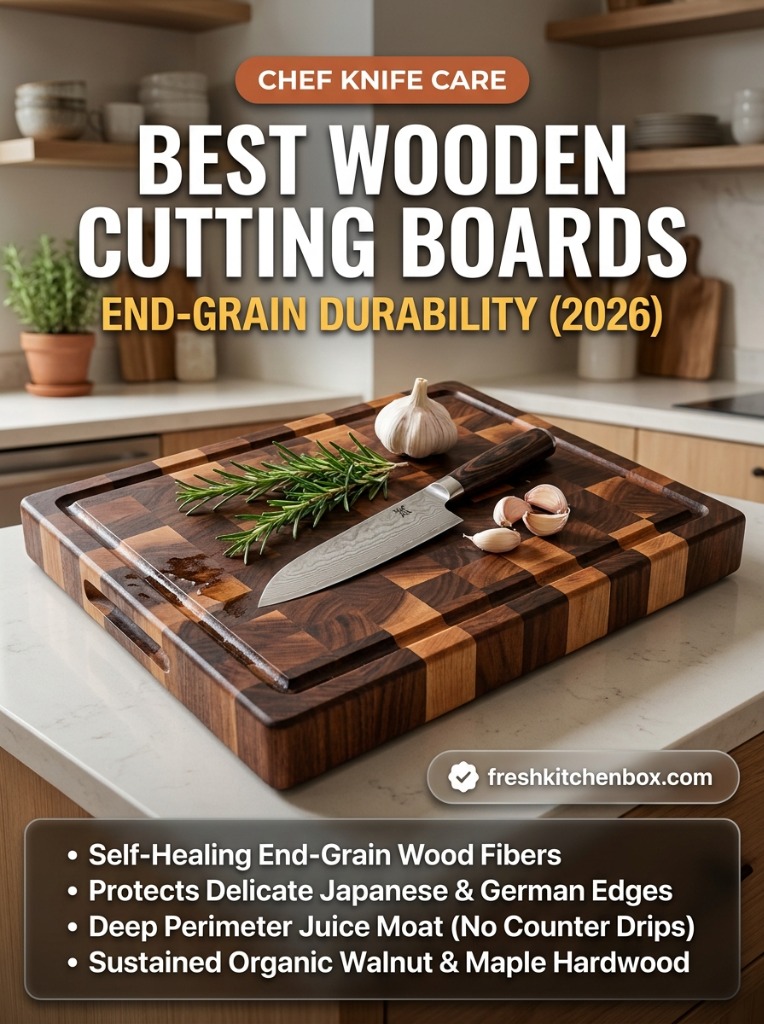
Our testing kitchen chopped over 200 pounds of root vegetables, carved standing rib roasts, and inspected blade micro-bevels under magnification. Our champion: The John Boos Block Chop-N-Slice End-Grain Maple Board (3-Inch Thick) remains the quintessential gold standard of American culinary butchery. For cooks who prefer darker, moisture-rich luxury aesthetics with deep juice reservoirs, the Sonder Los Angeles Dark Walnut End-Grain Board delivers exquisite craftsmanship.
🏆 Quick Summary: Top Wooden Cutting Boards
- Top Professional Butcher Choice: John Boos End-Grain Maple Block – 3 inches of solid northern hard rock maple, self-healing wood fibers, NSF certified.
- Best Modern Countertop Centerpiece: Sonder LA Large Walnut End-Grain Board – Built-in perimeter juice groove, integrated side handles, natural non-slip rubber feet.
- Best Value Edge-Grain Alternative: Teakhaus Traditional Edge Grain Board – Naturally oily teak wood resists moisture, lighter weight for easy sink washing.
End-Grain vs. Edge-Grain: Why End-Grain Is Worth the Investment
- Edge-Grain: Wood fibers run horizontally. When a knife slices down, it severs the fibers across the grain, creating visible knife scars over time and dulling the blade edge faster.
- End-Grain: Wood blocks are arranged vertically, like bristles on a brush. When the blade strikes, the wood fibers separate and allow the knife tip to slide between them, then close back up naturally (“self-healing”). Knife edges stay sharp up to 4 times longer.
Essential Wood Seasoning Protocol
A quality wooden board should never see a dishwasher. Once a month, hydrate the timber by rubbing food-grade mineral oil generously across all sides, letting it soak overnight, and sealing with beeswax paste to create a waterproof barrier against bacteria and warpage.