Picture this: the smell of fresh herbs, the sizzle of a hot pan, and the excitement of creating a delicious meal from scratch. The kitchen is truly the heart of the home, a place where creativity and love come together.
But amidst the culinary magic, there lies a reality that can’t be ignored—safety. In the blink of an eye, a simple oversight can turn your joyful cooking experience into a cause for concern. That’s why it’s crucial to understand and implement essential safety rules in the kitchen.
Imagine the peace of mind you’ll have knowing you’re equipped to handle any situation, confidently and safely. By learning these rules, you can prevent accidents, protect your loved ones, and keep your kitchen a happy and secure space. Are you ready to discover the secrets to a safe cooking haven? Keep reading to uncover the must-know safety rules that every home chef should follow. Your kitchen—and your peace of mind—depend on it.
Importance Of Kitchen Safety
The kitchen is often the heart of the home, a place where families gather to cook, eat, and share stories. However, it can also be a hotspot for accidents if safety rules are ignored. Understanding the importance of kitchen safety can protect you and your loved ones from potential hazards.
Why Prioritize Kitchen Safety?
Kitchen safety is crucial because it helps prevent accidents that can lead to injuries. Burns, cuts, and slips are common in kitchens, but they can be avoided with the right precautions. Prioritizing safety ensures a smooth cooking experience and peace of mind.
Recognizing Common Hazards
Take a moment to scan your kitchen. What potential dangers do you see? Sharp knives, hot surfaces, and wet floors are just a few. By recognizing these hazards, you can take steps to mitigate risks before they become problems.
Simple Steps To Enhance Safety
- Keep knives sharp and stored safely.
- Always use oven mitts when handling hot items.
- Clean up spills immediately to prevent slips.
These simple actions can make a big difference in maintaining a safe kitchen environment. Imagine the relief of cooking without the worry of accidental injury.
Involving Family In Safety Practices
Safety is a family affair. Encourage everyone, even the kids, to follow safety rules. Teach them the importance of turning pot handles inward and never leaving cooking unattended. Involving your family reinforces the importance of these practices.
Real-life Consequences Of Ignoring Safety
Have you ever experienced a close call in the kitchen? Perhaps a near slip on a wet floor or a minor burn from a hot pan? Such experiences highlight the real consequences of ignoring safety. They serve as reminders to stay vigilant and attentive.
Creating A Culture Of Safety
How can you foster a culture of safety in your kitchen? Start by setting a good example. Consistently follow safety rules and encourage others to do the same. A kitchen that prioritizes safety is not just safer but more enjoyable for everyone.
Remember, a safe kitchen is a happy kitchen. What steps will you take today to ensure safety in your cooking space?
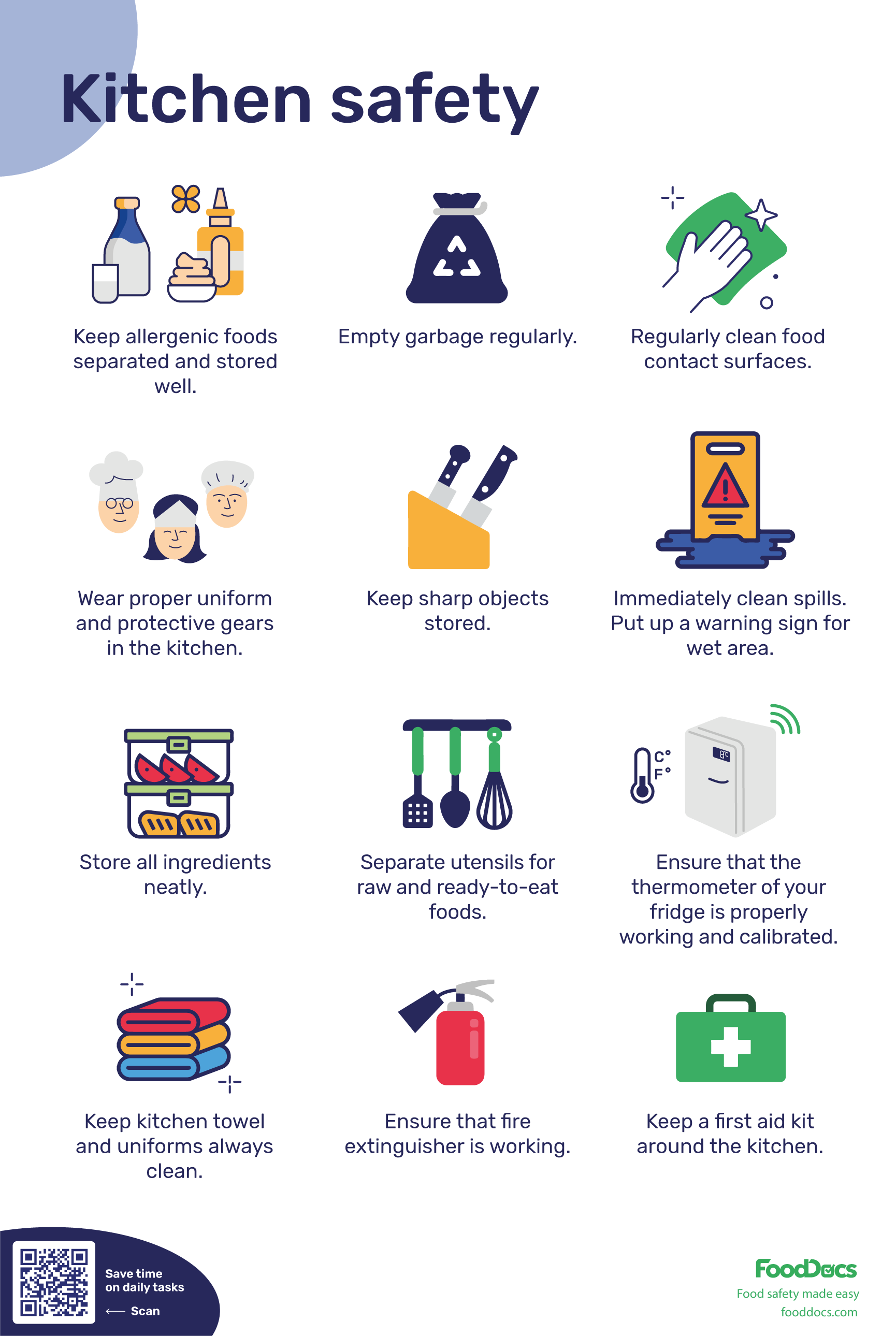
Credit: www.fooddocs.com
Common Kitchen Hazards
The kitchen is the heart of the home, bustling with activity and creativity. Yet, amidst the aroma of delicious dishes, several hazards lurk, waiting to disrupt your culinary adventure. Understanding these common kitchen hazards is crucial for maintaining a safe and enjoyable cooking environment. Let’s dive into some of these dangers and explore practical ways to avoid them.
Fire And Burns
Cooking involves heat, and heat can lead to fire. Have you ever left a pot unattended, only to return and find it smoking? This is a common mistake that can lead to kitchen fires. Always keep an eye on your stovetop, and never leave cooking food unattended.
Protect yourself from burns by using oven mitts or pot holders when handling hot cookware. Remember to turn pot handles away from the edge of the stove to prevent accidental spills. Do you have a fire extinguisher nearby? It’s worth considering.
Cuts And Lacerations
Sharp knives are essential for efficient cooking, but they can also be dangerous. Have you ever rushed while chopping vegetables and ended up with a cut? This is a common kitchen hazard. Ensure your knives are sharp; dull blades require more force and can slip more easily.
Always cut away from your body and use a stable cutting surface. Consider investing in a cut-resistant glove if you’re prone to accidents. How confident are you in your knife skills? Practice makes perfect, but caution is key.
Slips And Falls
Wet floors or scattered items can turn your kitchen into a slippery zone. Have you ever hurried to answer a phone call and slipped on a wet floor? Such incidents are preventable. Keep your kitchen floor dry and clutter-free to minimize the risk of falls.
Wear non-slip shoes, especially if you spend a lot of time in the kitchen. Regularly check for spills and clean them immediately. What’s your strategy for keeping the kitchen safe from falls?
Food Contamination
Cross-contamination is a silent hazard that can lead to foodborne illnesses. Have you ever used the same cutting board for raw meat and vegetables without washing it? This common oversight can introduce harmful bacteria into your meals.
Use separate cutting boards for different food types and wash your hands frequently. Ensure your refrigerator is at the correct temperature to keep food fresh. How vigilant are you about food safety practices?
Safety in the kitchen is not just about avoiding accidents; it’s about creating a space where you can cook with confidence and joy. By being mindful of these common hazards, you can turn your kitchen into a safe haven for culinary creativity. Remember, safety starts with awareness and action.
Fire Prevention Tips
Fire prevention in the kitchen is essential for safety. Cooking leads to many home fires. Protect your kitchen with smart practices. Learn how to avoid these dangers.
Safe Cooking Practices
Keep flammable items away from the stove. Use pot holders, not towels. Never leave cooking unattended. Set timers to remind you of food on the stove. Wear short sleeves to prevent catching fire. Turn pot handles inward to avoid accidents.
Proper Use Of Appliances
Read appliance manuals for correct usage. Clean appliances regularly to avoid grease buildup. Unplug appliances after use. Check for frayed cords. Use appliances on stable surfaces. Keep them away from water sources. Avoid overloading electrical outlets.
Maintaining Fire Extinguishers
Install a fire extinguisher in the kitchen. Learn to use it properly. Check expiration dates regularly. Keep the extinguisher accessible. Make sure everyone knows its location. Replace old extinguishers immediately. Practice using it to build confidence.

Credit: ca.pinterest.com
Preventing Cuts And Injuries
In the kitchen, cuts and injuries are common. Sharp tools are everywhere. Keeping safe is crucial. Follow simple rules to protect yourself.
With care, you can avoid accidents. Learn how to handle knives and sharp objects. Use protective gear when needed.
Knife Safety Techniques
Hold knives firmly. Keep fingers away from the blade. Cut away from your body. Use a cutting board for stability.
Keep knives sharp. Dull blades slip easily. Store them in a safe place. This prevents accidental cuts.
Using Protective Gear
Wear cut-resistant gloves. They protect your hands. Aprons can prevent cuts to your body. They also keep clothes clean.
Safety goggles are useful. They protect your eyes from splashes. Keep protective gear handy.
Safe Handling Of Sharp Objects
Handle sharp objects with care. Keep them organized. Messy areas lead to accidents. Avoid rushing when using sharp tools.
Use scissors correctly. Keep blades away from skin. Store them with the blades closed. Teach children about sharp objects.
Avoiding Slips And Falls
Slips and falls in the kitchen can turn a simple cooking session into a trip to the hospital. Ensuring a safe kitchen environment is key to preventing accidents. Let’s dive into practical ways to keep your kitchen slip-free.
Keeping Floors Dry
Water spills are the usual suspects in kitchen slips. The moment you notice a spill, grab a towel and clean it up. Don’t wait for it to dry on its own.
Consider using mats near the sink and stove to catch any drips or spills. These mats can be your first line of defense against slippery surfaces.
Check under your fridge and dishwasher regularly for leaks. A hidden water puddle can be a surprise you don’t want.
Organizing Kitchen Space
A cluttered kitchen is an accident waiting to happen. Keep your countertops and floors free of unnecessary items. This not only prevents falls but makes cooking more efficient.
Use shelves and cabinets to store utensils and appliances. When everything has its place, you’re less likely to trip over an errant pan or blender.
Ask yourself: Is your kitchen layout conducive to safety? Sometimes, a little rearranging can make all the difference.
Wearing Non-slip Footwear
Your choice of footwear can be a game-changer in kitchen safety. Opt for shoes with non-slip soles. They’re designed to grip surfaces better.
Say goodbye to flip-flops or socks that have no traction. If you’re spending a lot of time cooking, invest in kitchen-friendly footwear.
Imagine cooking confidently without the fear of losing your footing. Isn’t that worth considering?
Safety in the kitchen is about being proactive. With these strategies, you can cook with peace of mind and keep those slips and falls at bay.
Ensuring Food Safety
Following safety rules in the kitchen prevents food contamination. Clean surfaces and hands often. Keep raw and cooked foods separate. Cook foods to the right temperature. Store perishables correctly.
Ensuring food safety in the kitchen is vital. It prevents foodborne illnesses. Proper food handling protects your health. Learning these basics keeps meals safe and tasty. Let’s explore essential food safety rules.Proper Food Storage
Storing food correctly maintains its freshness. Always refrigerate perishables quickly. Use airtight containers for leftovers. Label them with dates. This prevents spoilage. Keep raw meats on the bottom shelf. This stops juices from dripping onto other foods. Store dry goods in cool, dry places. This avoids mold growth.Avoiding Cross-contamination
Cross-contamination spreads bacteria. Use separate cutting boards for meat and vegetables. Wash boards and knives after each use. Never place cooked food on plates that held raw meat. Keep raw and cooked foods apart during preparation. Always wash hands before switching tasks in the kitchen.Maintaining Cleanliness
Cleanliness is key to food safety. Wash hands with soap for 20 seconds. Clean kitchen surfaces regularly. Use hot, soapy water. Sanitize sponges and dishcloths often. Dirty tools can carry germs. Keep your refrigerator clean. Remove expired foods promptly. A tidy kitchen is a safe kitchen.Child Safety In The Kitchen
Ensuring child safety in the kitchen involves setting clear rules. Keep sharp objects out of reach and use childproof locks. Teach kids safe practices, like avoiding hot surfaces and using utensils correctly. Supervise young children at all times to prevent accidents and promote a safe environment.
Ensuring child safety in the kitchen is crucial for every parent and guardian. The kitchen, often the heart of the home, can also be a place full of potential hazards for curious little ones. With sharp tools, hot surfaces, and electrical appliances around, it’s essential to create a safe environment where children can explore and learn without risk. Let’s dive into how you can make your kitchen safer for children and instill good habits early on.Securing Dangerous Items
One of the simplest ways to keep your children safe is by securing all dangerous items. Sharp objects like knives, scissors, and skewers should be stored in locked drawers or high cabinets. Consider using childproof locks to ensure these items are out of reach. Cleaning supplies and chemicals also pose a threat. Keep these under the sink with safety latches or store them in a separate, locked cupboard. By minimizing access, you significantly reduce the risk of accidents.Teaching Safe Practices
Education plays a vital role in child safety. Teach your children about the dangers in the kitchen in a calm and straightforward manner. Explain why certain appliances should not be touched and how hot surfaces can cause burns. Involve them in simple tasks like washing fruits and vegetables or setting the table. This encourages them to understand the kitchen environment under your supervision. How do you handle it when your child wants to help with cooking? This can be a perfect opportunity to teach them about safety and responsibility.Creating A Child-friendly Space
Designing a child-friendly kitchen space can make a world of difference. Allocate a specific area where your children can safely engage with kitchen activities. This could include a small table with plastic utensils or a drawer filled with safe, non-breakable items they can play with. Consider installing a safety gate to section off hazardous areas like the stove or oven. You can also use corner guards on sharp countertops. Small adjustments like these can make the kitchen a safer and more welcoming place for your children. When thinking about child safety in the kitchen, what measures are you planning to take to make it a secure and educational environment? Implementing these practices not only protects your children but also fosters a sense of awareness and responsibility from an early age.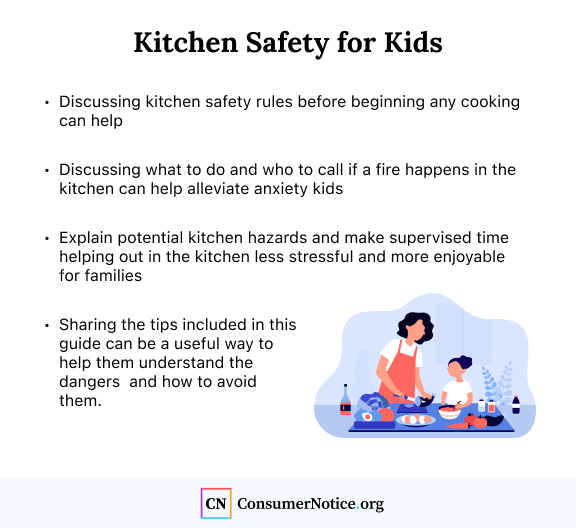
Credit: www.consumernotice.org
Emergency Preparedness
Emergency preparedness in the kitchen is essential. Accidents can happen unexpectedly. Having a plan can prevent panic. Knowing basic safety rules helps. Preparedness ensures quick responses during emergencies. This section covers first aid basics, emergency contacts, and creating a safety plan.
First Aid Basics
First aid knowledge is crucial. It helps treat minor injuries immediately. Keep a first aid kit accessible. Include bandages, antiseptic wipes, and gauze. Learn how to treat burns and cuts. Knowledge of CPR is valuable. Training courses are available locally.
Emergency Contacts
Having emergency contacts is vital. Display phone numbers clearly. Include fire department and ambulance services. List poison control center numbers. Ensure contacts are up-to-date. Family members should know these numbers. Regularly check emergency contact lists.
Creating A Safety Plan
A safety plan is necessary. It outlines emergency procedures. Discuss the plan with family members. Practice drills regularly. Identify exit routes and safe spots. Install smoke detectors in the kitchen. Ensure fire extinguishers are functional. Review the safety plan frequently.
Frequently Asked Questions
What Are 5 Safety Rules In The Kitchen Food?
1. Wash hands with soap before handling food. 2. Keep raw and cooked foods separate to avoid contamination. 3. Use a food thermometer to ensure meats are cooked properly. 4. Store perishables in the fridge to maintain freshness. 5. Clean kitchen surfaces regularly to prevent bacteria growth.
What Are 10 Safety Rules?
1. Always wear protective gear. 2. Follow all safety instructions. 3. Keep your work area clean. 4. Report hazards immediately. 5. Use tools properly. 6. Avoid shortcuts. 7. Stay alert and focused. 8. Follow emergency procedures. 9. Maintain good posture.
10. Take regular breaks.
What Are The 4 Basic Rules Of Food Safety?
The four basic rules of food safety are: Clean surfaces and hands regularly, separate raw foods, cook foods to safe temperatures, and chill perishables promptly. These practices help prevent foodborne illnesses and ensure safe consumption.
What Are The 10 Hygiene Rules In The Kitchen Pdf?
Download the PDF for 10 kitchen hygiene rules, including hand washing, sanitizing surfaces, proper food storage, and safe cooking practices.
Conclusion
Staying safe in the kitchen is very important. Simple rules can prevent accidents. Always keep knives sharp and stored safely. Clean spills immediately to avoid slips. Use oven mitts to handle hot items. Turn pot handles inward to prevent bumps.
Keep a fire extinguisher nearby, just in case. Teach children basic safety tips early. Remember, a safe kitchen makes cooking more fun. Practice these rules daily. Your family and friends will thank you. Safety first, always. Enjoy cooking with peace of mind.
Your kitchen should be a place of joy, not accidents.