Affiliate Disclosure: This post may contain affiliate links. If you purchase through links on our site, we may earn an affiliate commission at no extra cost to you.
When you step into your kitchen, choosing the right cooking oil can be a game-changer for your meals. With so many options lining the grocery store shelves, how do you decide which oil is best for your health and taste buds?
Whether you’re sautéing vegetables, grilling meat, or baking treats, the oil you select can transform your dish from ordinary to extraordinary. By understanding the unique qualities of each type of oil, you’ll not only enhance your cooking but also ensure you’re making health-conscious decisions.
Curious to learn which oils will elevate your culinary creations? Dive into this guide to discover the best oils for cooking, tailored to your needs and lifestyle.
Benefits Of Cooking Oils
Cooking oils are more than just a kitchen staple. They offer a variety of health benefits. Choosing the right oil can enhance flavor and nutrition. Each oil has its own unique properties. Some oils are rich in healthy fats. Others offer antioxidants and vitamins.
Rich In Healthy Fats
Many cooking oils are high in healthy fats. Olive oil and avocado oil contain monounsaturated fats. These fats support heart health. They can lower bad cholesterol levels. They help maintain good cholesterol levels.
Source Of Essential Nutrients
Some oils provide essential nutrients. Coconut oil contains medium-chain triglycerides. These can boost energy. Flaxseed oil is high in omega-3 fatty acids. Omega-3s support brain function and heart health.
Antioxidant Properties
Cooking oils can be a source of antioxidants. Olive oil is rich in polyphenols. These compounds fight free radicals. They help reduce inflammation in the body. Antioxidants protect cells from damage.
Enhances Flavor And Aroma
Oils can enhance the taste of your food. Sesame oil adds a nutty flavor. Butter gives dishes a rich, creamy taste. The right oil can transform a simple dish. It adds depth and complexity to meals.
Versatile In Cooking Techniques
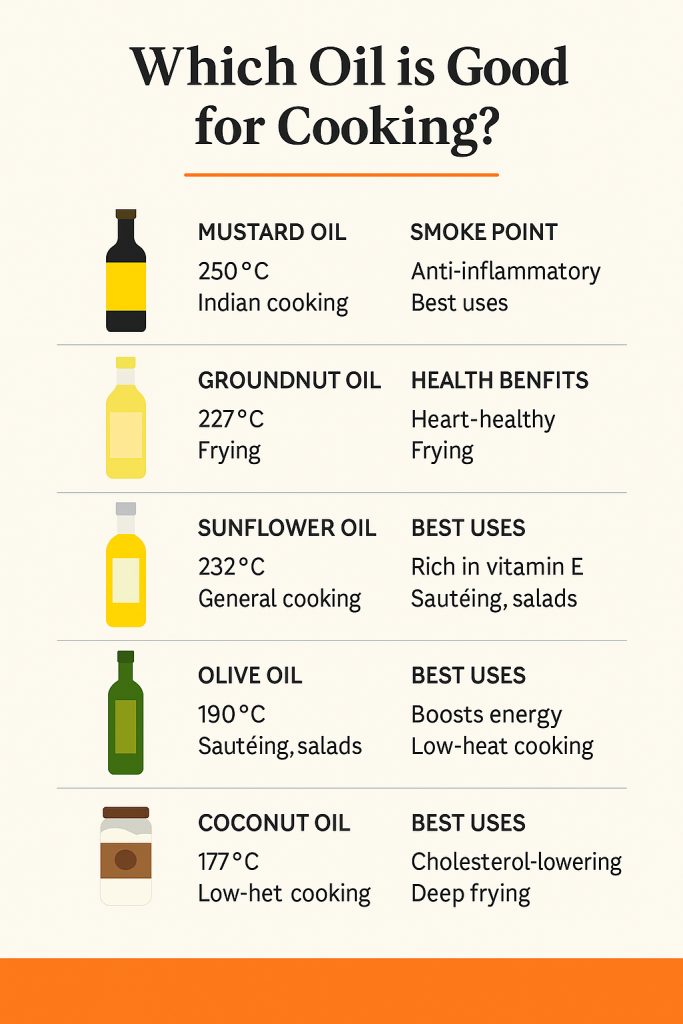
Different oils suit different cooking methods. Peanut oil is great for frying. It has a high smoke point. Olive oil is perfect for salads and sautéing. It adds a delicate flavor to dishes.
Factors To Consider
Choosing the best oil for cooking involves several factors. Each oil has unique characteristics that impact flavor and health. Considerations include smoke point, flavor profile, and nutritional value. Understanding these aspects ensures you pick the right oil for your dish.
Smoke Point
The smoke point is the temperature at which oil starts smoking. High smoke point oils are ideal for frying or sautéing. Oils like avocado and canola have high smoke points. They withstand high heat without breaking down.
Flavor Profile
Different oils offer distinct flavors. Olive oil has a rich, fruity taste. Sesame oil adds a nutty aroma to dishes. Choose oils that complement your recipe’s flavor. Mild oils are versatile and work in many dishes.
Nutritional Value
Nutritional value varies among oils. Olive oil is rich in healthy fats and antioxidants. Coconut oil contains medium-chain triglycerides, beneficial for energy. Consider oils with vitamins and nutrients for a healthier option.
Olive Oil
Olive oil is a staple in many kitchens and for good reason. Its rich flavor and health benefits make it a favorite among home cooks and professional chefs alike. Whether you’re drizzling it over a fresh salad or using it to sauté vegetables, olive oil can elevate any dish. But with so many types available, how do you know which one to choose?
Extra Virgin Vs. Regular
When you shop for olive oil, you’ll often see labels like “extra virgin” and “regular”. Do you know the difference? Extra virgin olive oil is made from pure, cold-pressed olives, giving it a robust flavor and higher nutritional value. This type is less processed and retains more of the olive’s natural antioxidants.
Regular olive oil, on the other hand, is a blend of cold-pressed and processed oils. It has a milder taste and a higher smoke point, making it more versatile for everyday cooking. If you’re looking for something subtle that won’t overpower your dish, regular olive oil might be your go-to.
Best Uses
Are you wondering how to make the most out of your olive oil? Use extra virgin olive oil for dishes where its bold taste can shine. Try it in salad dressings, dipping sauces, or drizzled over grilled veggies. It can even be a delightful finishing touch on soups or pasta.
For cooking at higher temperatures, regular olive oil is your friend. With its higher smoke point, it’s perfect for frying, roasting, or baking. Imagine crispy, golden potatoes or a perfectly seared chicken breast.
Do you have a favorite olive oil dish? Share your experiences and inspire others to experiment. Remember, the best oil for cooking isn’t just about taste—it’s about finding the right balance for your culinary creations.
Coconut Oil
Coconut oil is a popular choice for cooking due to its high smoke point. It adds a subtle flavor to dishes. Many prefer it for frying and baking, making it a versatile kitchen staple.
Coconut oil is a popular choice for cooking, celebrated for its unique flavor and versatility. Whether you’re frying, baking, or even adding a touch to your smoothies, coconut oil offers a distinctive tropical note. Its composition makes it a staple in many kitchens around the world. But is it the right choice for you?
Health Benefits
Coconut oil is rich in medium-chain triglycerides (MCTs), which are known for providing a quick source of energy. Unlike long-chain fats, MCTs are absorbed more quickly by the body, potentially aiding in weight management. Some studies suggest coconut oil may help raise good HDL cholesterol levels, supporting heart health. For those with dry skin, coconut oil isn’t just for the kitchen. It can double as a moisturizer, providing a natural alternative to commercial lotions. Have you ever considered using it as a hair conditioner? Many people swear by its effectiveness in adding shine and reducing frizz.
Cooking Applications
Coconut oil has a high smoke point of about 350°F, making it suitable for frying and sautéing. Its stable structure means it can withstand moderate heat without breaking down. This makes it a reliable choice for everyday cooking. Do you enjoy baking? Coconut oil can be a great substitute for butter or other oils in recipes, adding a subtle coconut flavor. It works well in cookies, cakes, and even pie crusts. For a quick flavor boost, add a spoonful of coconut oil to your morning coffee or smoothie. It blends easily and can provide a creamy texture without dairy. Have you tried popping popcorn with coconut oil? It adds a delicious twist to a favorite snack. Coconut oil offers more than just culinary benefits. It’s a versatile addition to your kitchen that can enhance your meals and perhaps even your wellness routine. Would you consider adding it to your pantry?
Avocado Oil
Avocado oil stands out as a top choice for cooking due to its high smoke point. This makes it ideal for frying and sautéing. Its mild flavor enhances dishes without overpowering them. Rich in healthy fats, it supports heart health and adds a nutritious touch to meals.
Avocado oil stands out as a popular choice for cooking. Extracted from the creamy flesh of avocados, it offers a mild flavor. Its light taste complements many dishes without overpowering them. This versatile oil is gaining attention in kitchens worldwide.
Nutrient Content
Avocado oil is rich in healthy fats. These fats support heart health. It’s high in monounsaturated fats, which are good for you. These fats help lower bad cholesterol levels. Avocado oil also contains vitamin E. This vitamin acts as an antioxidant. It helps protect cells from damage. The oil is also a good source of lutein. Lutein supports eye health and vision. These nutrients make avocado oil a healthy choice.
Versatile Uses
Avocado oil suits many cooking methods. Its high smoke point makes it ideal for frying. You can use it for baking, too. Its mild flavor enhances salad dressings. Drizzle it over roasted vegetables for a tasty touch. Marinate meats with avocado oil for added moisture. This oil works well in homemade mayonnaise. Its versatility is one reason it is loved by cooks.
Credit: integrishealth.org
Canola Oil
Canola oil is a popular choice in many kitchens. It is known for its light flavor and high smoke point. This makes it versatile for various cooking methods. Extracted from the seeds of the canola plant, it is widely used worldwide. Its neutral taste does not overpower dishes, making it ideal for everyday cooking. Let’s explore its benefits and common uses.
Heart Health
Canola oil is low in saturated fat. This helps in reducing bad cholesterol levels. It’s rich in omega-3 and omega-6 fatty acids. These are essential for maintaining heart health. Regular consumption may lower the risk of heart disease. It is also a good source of vitamin E. This antioxidant supports a healthy heart and protects against damage.
Common Uses
Canola oil is perfect for frying and baking. Its high smoke point makes it ideal for deep frying. It doesn’t burn easily, ensuring a crisp texture. Use it for sautéing vegetables or searing meat. Its neutral flavor suits salad dressings and marinades. It’s also suitable for baking cakes and muffins. Its lightness ensures fluffy and moist results.
Sunflower Oil
Sunflower oil is a popular choice for cooking due to its neutral flavor and high smoke point. It suits various dishes, providing a light taste without overpowering other ingredients. Rich in vitamin E, it offers health benefits alongside its cooking versatility.
Sunflower oil is a staple in many kitchens. It’s versatile, light, and has a mild flavor that doesn’t overpower your dishes. It’s also heart-friendly, making it a popular choice for health-conscious cooks. But did you know that not all sunflower oils are the same?
High Oleic Vs. Regular
The two main types of sunflower oil are high oleic and regular. High oleic sunflower oil is rich in monounsaturated fats, making it more stable and suitable for high-temperature cooking. This means it’s great for frying, baking, or roasting without breaking down. On the other hand, regular sunflower oil contains more polyunsaturated fats. While it’s perfect for low-heat cooking like sautéing or making salad dressings, it can lose its health benefits when heated too much. So, when choosing sunflower oil, think about how you plan to use it.
Cooking Techniques
Sunflower oil shines in various cooking techniques. Frying with sunflower oil gives you crispy textures without leaving a heavy or greasy taste. I remember trying it for French fries, and the result was perfectly golden fries with a clean finish. For baking, sunflower oil can be a fantastic substitute for butter or margarine. It keeps baked goods moist and tender. Imagine a cake that stays fresh longer and has a delicate crumb. If you’re into stir-frying, sunflower oil’s high smoke point ensures that your vegetables remain crisp and vibrant. It’s the secret to achieving that perfect sizzle in your stir-fry. Choosing the right oil can elevate your cooking game. Which type of sunflower oil will you choose for your next culinary adventure?
Peanut Oil
Peanut oil stands out among cooking oils for its versatility. It is popular in Asian cuisine and known for its high smoke point. This makes it ideal for deep frying and sautéing. Peanut oil has a subtle taste, enhancing dishes without overpowering them. Many chefs prefer peanut oil for its clean flavor profile. It is a staple in many kitchens worldwide.
Flavor And Aroma
Peanut oil has a mild, nutty flavor. This adds depth to recipes, making dishes more flavorful. It does not overshadow other ingredients. Its aroma is light and pleasant. This quality makes it suitable for various cooking styles. Peanut oil enhances the natural taste of food.
Frying Benefits
Peanut oil has a high smoke point. This makes it perfect for frying. Foods cooked in peanut oil are crisp and golden. It handles high temperatures well. This prevents food from becoming greasy. Peanut oil ensures dishes are cooked evenly. It is a favorite for making delicious fried foods.
Sesame Oil
Sesame oil, known for its nutty flavor, ranks among the best oils for cooking. It enhances dishes with a rich taste and high smoke point, making it ideal for stir-frying and deep-frying. This versatile oil also offers health benefits with its antioxidants and healthy fats.
Sesame oil holds a special place in the kitchen. It is often celebrated for its unique flavor and versatility. This oil is extracted from sesame seeds and has been used for thousands of years. Its distinct nutty flavor can enhance many dishes. Many people appreciate its aroma and use it in various culinary creations.
Asian Cuisine
Sesame oil is a staple in Asian cuisine. It is used in many traditional dishes. Chefs often drizzle it over salads, noodles, and stir-fries. Its strong flavor adds depth and complexity to meals. In Japan, it enhances sushi and sashimi. In Korea, it is essential for kimchi and bulgogi. This oil is key in many Asian kitchens.
Nutritional Advantages
Sesame oil offers several nutritional benefits. It is rich in antioxidants, which support overall health. The oil contains heart-friendly fats that improve heart health. It also has anti-inflammatory properties. These can help reduce inflammation in the body. Sesame oil is a good source of vitamin E. This vitamin supports skin health and boosts the immune system. Including sesame oil in your diet can be a healthy choice.
Grapeseed Oil
Grapeseed oil shines in cooking due to its high smoke point and mild flavor. This versatile oil suits stir-frying, sautéing, and baking. Rich in polyunsaturated fats, it supports heart health.
Grapeseed oil is steadily becoming a kitchen staple for those seeking a versatile and health-conscious cooking option. Extracted from the seeds of grapes, this oil is often a byproduct of winemaking. Not only does it offer a light flavor that won’t overpower your dishes, but it also has several health benefits that you might find appealing.
High Smoke Point
One of the standout features of grapeseed oil is its high smoke point, around 420°F (216°C). This makes it perfect for high-heat cooking methods like frying and sautéing. Have you ever noticed how some oils start to smoke and burn, leaving a bitter taste? With grapeseed oil, you can avoid this issue and maintain the integrity of your dishes. Furthermore, the high smoke point ensures that the oil retains its nutritional properties during cooking. This means you’re not losing out on the health benefits while making your favorite stir-fry or roast. Isn’t it great when you can enjoy delicious food without compromising on health?
Health Properties
Grapeseed oil is packed with polyunsaturated fats, which are considered heart-healthy. These fats can help reduce bad cholesterol levels in your blood, potentially lowering the risk of heart disease. If you’re looking to improve your heart health, switching to grapeseed oil could be a small yet impactful change. Additionally, grapeseed oil contains antioxidants, including vitamin E. Antioxidants are known for their role in combating oxidative stress in the body. Why not give your body an extra boost while cooking your daily meals? Have you ever thought about the oil you use in your salad dressings? Grapeseed oil’s mild flavor makes it an excellent choice, ensuring your salads taste just right without any overpowering oiliness. This simple change could make your meals more enjoyable and heart-friendly. Grapeseed oil is more than just a trendy kitchen ingredient. It offers practical benefits that can improve both your cooking and your health. Will you make the switch and see the difference it can make in your culinary adventures?
Choosing The Right Oil
Choosing the right oil for cooking can impact both taste and health. Olive oil and canola oil are popular for their heart-friendly benefits, while coconut oil offers a unique flavor. Sunflower oil is versatile for frying, and avocado oil is great for high-heat cooking.
Choosing the right oil for cooking can transform your dish. The right oil enhances flavors and supports health. Different oils suit different cooking methods and dietary needs. Explore the best oils for your kitchen.
Cooking Methods
Certain oils are better for specific cooking techniques. High-heat cooking requires oils with high smoke points. Examples include canola, sunflower, and peanut oils. These oils prevent smoke and burnt flavors. For sautéing, olive oil or avocado oil work well. They add rich flavors to vegetables and meats. Baking demands oils that blend seamlessly, like coconut or butter. Their mild tastes complement baked goods. Salad dressings need oils with a smooth texture, such as extra virgin olive oil.
Dietary Needs
Dietary needs influence oil choices. Heart-healthy diets benefit from oils rich in unsaturated fats. Olive oil and flaxseed oil are excellent options. They support heart health with omega-3 fatty acids. Those watching calories might choose oils with fewer calories. Cooking spray or vegetable oil can be alternatives. For vegan diets, plant-based oils like coconut or sesame oil are ideal. They enhance dishes while aligning with ethical choices. Allergies also guide oil selection. Peanut allergies require peanut-free oils, like canola or grapeseed.
Credit: originz.co
Frequently Asked Questions
What Is The Healthiest Oil To Cook With?
Extra virgin olive oil is the healthiest for cooking. It contains heart-healthy monounsaturated fats and antioxidants. It is versatile and enhances flavor in many dishes. Use it for sautéing, roasting, and dressing salads. Its health benefits and rich taste make it a top choice for many.
Which Is The Unhealthiest Cooking Oil?
Palm oil is often considered the unhealthiest cooking oil. It contains high levels of saturated fats, which can raise cholesterol levels and increase heart disease risk. Opt for healthier alternatives like olive or canola oil for better heart health. Choose oils with unsaturated fats for a healthier diet.
Which Oil Is Best For Heart And Cholesterol?
Olive oil is best for heart and cholesterol. It contains healthy monounsaturated fats. Choose extra virgin olive oil for maximum benefits. It helps reduce bad cholesterol levels and promotes heart health. Include it in your diet for better cardiovascular wellness.
What Oil Works Best For Cooking?
Olive oil is ideal for cooking due to its healthy fats and rich flavor. Coconut oil suits high-heat cooking with its stability. Avocado oil offers versatility and a neutral taste. Choose oils based on flavor preference and cooking method. Always consider smoke point and health benefits for optimal choice.
Conclusion
Choosing the right cooking oil matters for health and taste. Olive oil is excellent for salads and low-heat cooking. Coconut oil adds a unique flavor to dishes. Avocado oil withstands high heat, making it versatile. Canola oil is a budget-friendly choice for frying.
Peanut oil enhances Asian recipes with its nutty taste. Each oil offers different benefits, so select based on your needs. Experiment to find your favorite. Your meals will taste better. Your body will thank you. Enjoy cooking with these oils!








