Affiliate Disclosure: This post may contain affiliate links. If you purchase through links on our site, we may earn an affiliate commission at no extra cost to you.
Are you tired of baking chocolate chip cookies that turn out too crispy or too soft? You’re not alone.
Getting that perfect chewy texture with just the right amount of crunch can be a challenge. The secret often lies in the oven temperature. By mastering this simple yet crucial detail, you can transform your cookies from average to extraordinary.
Imagine the delightful aroma wafting through your kitchen, and the satisfaction of biting into a cookie with the ideal balance of gooey chocolate and a perfectly baked dough. Read on to discover the best oven temperature for chocolate chip cookies that will have your friends and family begging for your recipe. Don’t miss out on becoming the cookie connoisseur you’ve always wanted to be!
Ideal Baking Temperature
Finding the ideal baking temperature for chocolate chip cookies can be a game-changer in your baking journey. Have you ever wondered why some cookies turn out soft and chewy, while others are crispy? The secret often lies in the oven temperature. Let’s dive into how you can achieve cookie perfection with the right settings.
Setting your oven to the right temperature is crucial for cookie success. Most recipes recommend 350°F (175°C) as the sweet spot. This temperature is a great starting point because it allows the cookies to bake evenly.
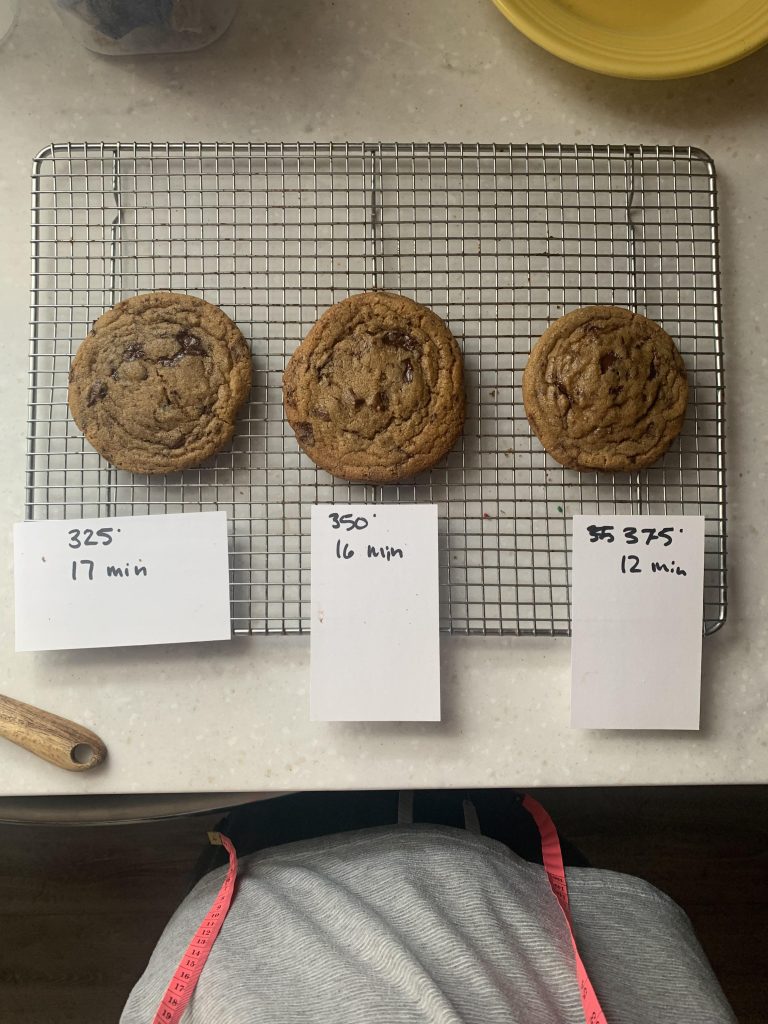
At 350°F, the sugars caramelize nicely, creating a delightful texture. If you bake them at a higher temperature, say 375°F (190°C), you’ll find your cookies browning faster. This can lead to a crispier edge and a softer center.
But what if you prefer your cookies to be extra soft? Lowering the temperature to 325°F (160°C) can work wonders. The cookies will spread more slowly, giving you a chewy texture throughout.
Experimentation Is Key
Don’t be afraid to play around with the oven temperature. You might discover your own perfect setting. As a child, I once accidentally baked cookies at 400°F. They were crispy but surprisingly delicious.
Consider the type of cookie you want. Are you aiming for a gooey center or a crisp bite? Adjusting the temperature can help you achieve that specific texture.
Take notes as you experiment. Each batch will teach you something new about the interaction between heat and dough.
The Importance Of Oven Calibration
Is your oven calibrated correctly? Many ovens run hotter or cooler than they indicate. This can throw off your baking game.
Invest in an oven thermometer to ensure accuracy. This small tool can make a big difference in your baking results.
A calibrated oven ensures consistency, so your cookies turn out perfect every time. Have you noticed uneven baking in your batches? Calibration might be the culprit.
Considerations For Baking Pans
Not all baking pans are created equal. Their material can affect how your cookies bake. Metal pans often lead to crisper cookies, while silicone mats can keep them soft.
Choose your baking surface wisely. It can complement your temperature choice and help achieve the desired texture.
If you’re unsure, try baking one batch on different surfaces. Observe the differences and decide what works best for you.
Engage And Reflect
Have you found your ideal baking temperature yet? Share your experiences in the comments below. Your insights could help someone else achieve cookie perfection.
Think about what you learned today. How will you apply these tips to your next baking session? The perfect cookie could be just a temperature adjustment away.
Remember, baking is as much an art as it is a science. Your oven temperature is just one piece of the puzzle. What’s your favorite cookie texture, and how do you plan to achieve it?
Credit: bakeschool.com
Effects Of Temperature On Texture
Baking chocolate chip cookies at 350°F creates the perfect texture. The cookies become chewy inside and slightly crispy outside. The even heat ensures consistent baking, delivering delightful cookies every time.
Effects of Temperature on Texture The temperature of your oven can make or break the texture of your chocolate chip cookies. It’s not just about getting them baked; it’s about achieving that perfect texture that keeps you coming back for more. Whether you prefer them chewy or crispy, the oven temperature plays a crucial role. Experimenting with different temperatures can lead to surprising results. Have you ever noticed how a slight tweak in temperature can change everything? Let’s dive into how temperature affects the cookie’s texture.
Chewy Vs. Crispy
If you’re a fan of chewy cookies, you’ll want to aim for a lower oven temperature, around 325°F (163°C). This allows the cookies to spread more, resulting in a moist and chewy texture. The edges will be slightly crispy, offering a delightful contrast. On the other hand, if you like your cookies crispy, set your oven to a higher temperature, around 375°F (190°C). This higher heat will quickly cook the edges, making them crisp, while the center remains slightly soft. Finding the perfect balance can be like unlocking a secret recipe. What’s your cookie preference? The answer might just be a few degrees away.
Soft Centers
Achieving soft centers in your cookies is all about the right temperature and timing. Baking at 350°F (177°C) often strikes the perfect balance, giving you cookies that are soft in the middle and slightly firm on the outside. Timing is everything. A minute too long in the oven can result in a firmer cookie than you intended. Keep a close eye on them as they bake. How do you ensure your cookies have that perfect softness? Sometimes, pulling the cookies out when they look slightly underdone helps. They will continue to cook on the baking sheet even after leaving the oven. This trick can give you that dreamy, soft center every time. Experimenting with your oven temperature can lead you to your ideal cookie texture. Try adjusting the temperature and see how it transforms your cookies. What’s stopping you from baking that perfect batch today?
Common Temperature Ranges
When it comes to baking chocolate chip cookies, the oven temperature is the key to achieving your desired texture and flavor. Bakers have experimented with various temperature ranges to perfect their cookies, and each range offers distinct results. Understanding these common temperature ranges can help you bake the perfect batch. Whether you prefer a soft, chewy cookie or one with a crispy edge, the temperature setting plays a crucial role. Let’s dive into the different temperature ranges and see what suits your taste.
Low Heat Baking
Low heat baking usually involves setting your oven between 300°F and 325°F. This method is ideal for those who love soft and chewy cookies. At these temperatures, the cookies bake slower, allowing them to stay moist and tender. The edges won’t crisp up as much, but the centers will be gooey and delightful.
Have you ever tried baking at a lower temperature? It can be a game-changer if you prefer a melt-in-your-mouth texture. You might find yourself reaching for another cookie before you know it! Experiment with this range if you’re after a cookie that feels almost underbaked.
Moderate Heat Baking
Moderate heat baking falls between 350°F and 375°F. This range is the sweet spot for many classic chocolate chip cookie recipes. It balances the chewiness with a slightly crispy edge, offering a satisfying contrast in textures.
If you’re looking for cookies that hold their shape without turning into a crunchy treat, moderate heat is your best bet. It’s the temperature range most recipes call for, and it’s easy to see why. The cookies come out looking picture-perfect and taste divine.
High Heat Baking
High heat baking, set around 375°F to 400°F, is for those who crave a crispy cookie. The higher temperature gives the edges a delightful crunch while maintaining a chewy center. This method is great if you want your cookies to have a bit of bite.
Some might think baking at a higher temperature risks burning the cookies, but with careful timing, you can achieve a wonderful texture. Have you tried pushing the heat up a notch? It might surprise you how the flavors deepen and the textures evolve.
So, what’s your favorite cookie texture? Trying different temperature ranges might reveal a new favorite way to enjoy chocolate chip cookies. Consider experimenting with these methods next time you bake and discover which temperature range best suits your taste buds.
Temperature Tips For Consistency
Perfecting chocolate chip cookies is an art, and getting the oven temperature right is a crucial part of the process. Whether you’re a seasoned baker or just starting, understanding temperature tips can make a big difference in achieving consistent results. This section will guide you through some key practices to ensure your cookies turn out perfectly every time.
Preheating Importance
Have you ever wondered why your cookies sometimes spread too much or end up raw in the middle? The secret often lies in preheating your oven. Ensuring your oven is at the correct temperature before placing your cookies inside is vital. It allows the dough to start baking immediately, maintaining its shape and achieving the perfect texture.
Picture this: you’re excitedly mixing your cookie dough, dreaming about that first bite. But without proper preheating, your cookies might not live up to your expectations. Preheat your oven to the recommended temperature for at least 10-15 minutes. This simple step can transform your baking experience.
Oven Thermometer Use
Even if your oven has a digital display, it might not always be accurate. That’s where an oven thermometer comes into play. It’s a small investment that can drastically improve your baking results. Place the thermometer inside your oven to verify the actual temperature. You’ll be surprised how often ovens run hotter or cooler than indicated.
Imagine the frustration of pulling out a batch of cookies only to find them overbaked or underbaked. An oven thermometer helps you dodge these pitfalls. Trusting the thermometer over the oven’s built-in gauge can be your secret weapon for consistency. Have you considered that your oven’s quirks might be the reason behind your cookie mishaps?
Embrace these temperature tips and elevate your chocolate chip cookie game. With consistent results, you’ll become the go-to cookie baker among your friends and family. What changes can you make today for a perfect batch tomorrow?
Adjustments For Altitude
When baking chocolate chip cookies, altitude can affect results. Adjusting oven temperature is crucial for perfect cookies. Different altitudes require different modifications. Let’s explore how to bake delicious cookies at any altitude.
High Altitude Modifications
At high altitudes, the air pressure is lower. This affects baking, causing cookies to spread more. To counter this, slightly increase the oven temperature. A higher heat helps cookies set quickly, reducing spread. Consider raising the temperature by 20-25 degrees Fahrenheit.
Flour and liquid adjustments can also help. Add a bit more flour to the dough. This provides structure, preventing excessive spread. Reduce sugar slightly to avoid over-browning. These small changes make a big difference.
Low Altitude Considerations
At low altitudes, air pressure is higher. Cookies may bake slower, affecting texture. Lower the oven temperature slightly. Reduce it by 10-15 degrees Fahrenheit for even baking. This helps cookies maintain their moisture.
Adjust the baking time as well. Bake for a few minutes longer. This ensures cookies are cooked through without drying. Monitor cookies closely to avoid over-baking. A gentle approach yields perfect cookies every time.
Impact Of Oven Type
Choosing the right oven type affects your chocolate chip cookies. Each oven type has unique features. These features can change baking results. Understanding these differences helps achieve perfect cookies. Explore how different ovens impact your cookies below.
Convection Ovens
Convection ovens use fans to circulate hot air. This creates even heat distribution. Cookies bake faster and more evenly. Set your oven temperature lower than usual. Typically, reduce by 25 degrees Fahrenheit. This prevents over-browning. Cookies may turn out crispier on the edges. Some prefer this texture. Keep a close eye on baking time. Adjustments might be necessary for perfect cookies.
Conventional Ovens
Conventional ovens rely on radiant heat. Heat comes from top and bottom. They are common in many homes. Baking with these ovens may require more time. Set temperature at 350 degrees Fahrenheit for best results. Cookies may have softer centers. Rotate baking sheets halfway through. This ensures even cooking. Check cookies a few minutes before suggested time. Every oven varies slightly. Find the sweet spot for your perfect cookie.
Role Of Ingredients
The perfect chocolate chip cookie depends on the right ingredients. Each component plays a part in the texture and flavor. Understanding the role of these ingredients helps you bake better cookies. Let’s explore how butter, sugar, eggs, and flour impact your cookies.
Butter And Sugar Influence
Butter is key for flavor and texture. It makes cookies soft and rich. Room temperature butter mixes better with sugar. This creates a smooth dough. Sugar affects sweetness and texture. Brown sugar adds moisture, making cookies chewy. White sugar gives a crisp edge. Balance these to suit your taste.
Eggs And Flour Variations
Eggs bind ingredients and add moisture. They affect the cookie’s rise. More eggs mean a cakier texture. Less results in denser cookies. Flour gives structure. All-purpose flour is common for cookies. Different flours change texture. Whole wheat adds a nutty taste. Experiment with different flours for unique results.
Credit: joyfoodsunshine.com
Troubleshooting Temperature Issues
Finding the ideal oven temperature for chocolate chip cookies ensures a soft center and crisp edges. Experiment with 350°F to achieve delicious results. Slight adjustments can make a big difference in cookie texture and taste.
Troubleshooting Temperature Issues You’ve prepped your cookie dough, preheated the oven, and waited eagerly for that batch of chocolate chip cookies. But then, they come out not quite right. Temperature is often the culprit. Let’s dive into some common temperature issues and how you can fix them.
Overbaked Cookies
Imagine pulling out a batch of cookies that look more like crispy crackers. Overbaking can rob your cookies of their chewy goodness. Often, this occurs when the oven temperature is too high. Double-check your oven settings. Sometimes, a small adjustment can save your cookies from becoming too crunchy. A handy trick is to use an oven thermometer. It ensures your oven is at the correct temperature. Have you ever adjusted your oven to 350°F only to find out it’s actually at 375°F? This tool can help avoid such surprises.
Underbaked Centers
Ever bitten into a cookie with a doughy center? It’s frustrating when the edges are perfect but the inside is too soft. This usually happens when the oven temperature is too low, or the cookies are too big for the baking time. Try increasing the temperature slightly. Alternatively, flatten your cookies a bit before baking. It can help them cook more evenly. Consider your cookie size as well. Are they larger than usual? Adjusting baking time and temperature can help achieve that perfect balance. Have you thought about how size affects baking? It’s a simple fix that can make all the difference. Temperature issues can be tricky, but they’re not insurmountable. Have you faced any of these challenges? Share your experiences in the comments below.
Frequently Asked Questions
Should You Bake Chocolate Chip Cookies At 350 Or 375?
Bake chocolate chip cookies at 350°F for softer cookies. Use 375°F for a crispier texture. Adjust based on preference.
What Is The Best Temperature To Bake Chocolate Chip Cookies?
Bake chocolate chip cookies at 350°F (175°C) for the best results. This temperature ensures a perfect balance of soft and chewy texture. Make sure to preheat your oven for even baking. Adjust the time slightly based on your oven and cookie size.
How Long To Bake Cookies At 425 In The Oven?
Bake cookies at 425°F for 6-8 minutes. Keep an eye on them to avoid burning. Adjust time based on your oven’s performance and cookie size. For best results, check for a golden-brown edge. Remove promptly to keep them soft inside.
Enjoy your freshly baked cookies!
How Long To Leave Cookies In The Oven At 350 Degrees?
Bake cookies at 350 degrees for 10 to 12 minutes. Keep an eye on their edges. They should be golden brown. Adjust time based on your oven’s accuracy and cookie size. Remove them when they appear slightly underbaked, as they continue to cook on the baking sheet.
Conclusion
Finding the right oven temperature is key for perfect cookies. Baking at 350°F gives a balance of crispy edges and chewy centers. This temperature allows even cooking without burning. Your cookies will have a delightful texture and flavor. Experimenting with temperatures can lead to slight variations in taste.
Always keep an eye on the baking process. Adjust your oven settings if needed. Every oven is different, so results may vary. Enjoy your delicious homemade treats. Happy baking!








