Affiliate Disclosure: This post may contain affiliate links. If you purchase through links on our site, we may earn an affiliate commission at no extra cost to you.
Choosing the right cooking oil can feel like navigating a maze. With so many options lining the shelves, it’s easy to feel overwhelmed.
But what if I told you that the oil you choose can enhance flavors, boost your health, and even elevate your cooking skills? Imagine the satisfaction of knowing you’re making the best choice for your dishes and your well-being. We’ll cut through the noise and reveal which oil truly deserves a spot in your kitchen.
Curious about how the right oil can transform your meals? Keep reading to uncover the secrets that could change the way you cook forever.
Types Of Cooking Oils
Choosing the right cooking oil can impact taste and health. Different oils offer unique flavors and benefits. This section explores popular options available today.
Olive Oil
Olive oil is rich in monounsaturated fats. It’s known for heart health benefits. It has a distinct flavor, perfect for salads and dressings. Extra virgin olive oil is less processed. It retains more nutrients and taste.
Canola Oil
Canola oil is low in saturated fat. It’s ideal for frying and baking. Its neutral flavor doesn’t overpower dishes. It contains omega-3 fatty acids, beneficial for health.
Sunflower Oil
Sunflower oil is light and versatile. It has a high smoke point, suitable for frying. Rich in vitamin E, it supports skin health. Its mild taste complements many recipes.
Coconut Oil
Coconut oil adds a tropical hint to dishes. It contains medium-chain triglycerides. These fats may boost energy. It’s solid at room temperature but melts easily. Perfect for baking and sautéing.
Avocado Oil
Avocado oil has a buttery flavor. It’s high in monounsaturated fats. Great for high-heat cooking and dressings. Avocado oil supports heart and eye health.
Peanut Oil
Peanut oil is popular for frying. It has a high smoke point. Its nutty flavor enhances Asian dishes. Peanut oil contains vitamin E, promoting skin health.
Health Benefits Of Different Oils
Choosing the right oil for cooking can boost health. Olive oil is rich in heart-friendly fats. Coconut oil adds flavor and supports metabolism. Sunflower oil is great for frying with its high smoke point. Each oil offers unique benefits for different dishes.
Cooking oils are an essential part of every kitchen, and choosing the right one can significantly impact your health. Different oils offer unique benefits, so understanding their properties can help you make better choices for your meals. Whether you’re sautéing vegetables or drizzling over a salad, knowing the health benefits of various oils can be a game changer. Let’s dive into some of the most popular oils and their advantages for your well-being.
Heart Health
Some oils are particularly known for their heart-friendly properties. Olive oil, for instance, is rich in monounsaturated fats, which can help lower bad cholesterol levels. Consider swapping your regular cooking oil for olive oil to support your heart. It’s a simple change that can make a big difference. Another option is canola oil, which is low in saturated fat and high in omega-3 fatty acids. These elements are crucial for maintaining a healthy heart.
Anti-inflammatory Properties
Inflammation is a common issue that can lead to various health problems. Fortunately, some oils have anti-inflammatory properties that can help reduce this risk. Coconut oil contains lauric acid, known for its ability to combat inflammation. Adding coconut oil to your diet might be beneficial if you often experience inflammation. Avocado oil is another fantastic choice. Its high content of oleic acid can help reduce inflammation in the body.
Nutrient Content
Beyond fats, oils can be a source of essential nutrients. Sesame oil is packed with antioxidants and vitamin E, which are good for your skin and overall health. Have you ever tried cooking with sesame oil? It not only adds a nutty flavor but also provides vital nutrients. Flaxseed oil is a powerhouse of omega-3 fatty acids. These are essential for brain health and can be a great addition to your diet. Choosing the right oil can be as simple as understanding their health benefits. Which oil will you try next to enhance your meals and support your well-being?
Smoke Point Considerations
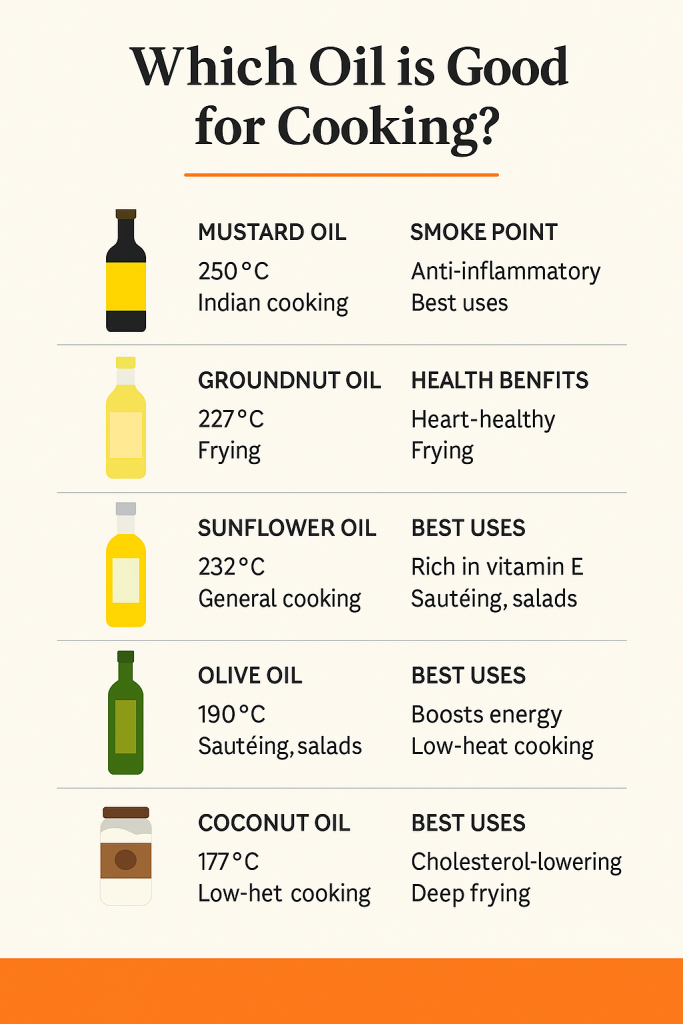
Different oils have varying smoke points, affecting their suitability for cooking. Olive oil is ideal for low-temperature cooking, while avocado oil suits high-heat methods. Understanding smoke points helps choose the best oil for frying or sautéing.
When it comes to cooking, the smoke point of oil is crucial. It refers to the temperature at which oil starts to smoke and break down. This affects not only the flavor but also the nutritional value of your dish. Choosing the right oil can make your cooking more efficient and your meals tastier. Have you ever noticed a bitter taste after sautéing vegetables? That’s likely due to using oil with a low smoke point. Let’s dive into the specifics and find out which oils are best suited for different cooking methods.
High Smoke Point Oils
High smoke point oils are ideal for frying and grilling. These oils can withstand high temperatures without breaking down. Consider using avocado oil, which has a smoke point of around 520°F (271°C). It’s great for searing meats and achieving that perfect golden-brown crust. Another option is refined safflower oil, which also has a high smoke point. You can use it for deep-frying without worrying about smoke or burnt flavors.
Medium Smoke Point Options
Medium smoke point oils are versatile and work well for sautéing and baking. Canola oil, with a smoke point of around 400°F (204°C), is a popular choice. It’s affordable and neutral in flavor, making it suitable for a variety of dishes. Olive oil, especially the light variant, is another great choice. It adds a subtle taste to roasted vegetables and pasta, enhancing your dish without overpowering it.
Low Smoke Point Oils
Low smoke point oils are best used for dressings and low-heat cooking. They preserve their flavor and nutrients when not exposed to high temperatures. Extra virgin olive oil, with a smoke point of about 325°F (163°C), is perfect for drizzling over salads. Walnut oil, known for its rich, nutty flavor, is another excellent option. Have you tried adding it to a fresh spinach salad? It’s a game-changer that adds depth and complexity to simple dishes. Choosing the right oil isn’t just about taste; it’s about maximizing the quality of your cooking. The next time you prepare a meal, ask yourself: is the oil I’m using suited for this cooking method? Making informed choices can elevate your culinary skills and ensure your meals are both delicious and nutritious.
Flavor Profiles And Pairings
Choosing the right oil can enhance your dish’s flavor. Different oils bring unique taste profiles to the table. Understanding these can elevate your culinary creations. Let’s explore the flavor profiles of cooking oils and their best pairings.
Neutral Flavors
Neutral oils have subtle tastes. They don’t overpower the main ingredients. Canola oil and vegetable oil are popular choices. These oils allow other flavors to shine. Use them in baking or frying. They suit dishes needing mild flavors.
Robust Tastes
Some oils boast bold and distinct flavors. Olive oil and sesame oil are prime examples. Olive oil adds a fruity, rich taste. Sesame oil gives a nutty, aromatic touch. These oils enhance dishes with their strong presence.
Best Pairings With Dishes
Pair neutral oils with baked goods or fried foods. They ensure the main flavors remain the focus. Robust oils work well with salads and marinades. Olive oil complements Mediterranean dishes. Sesame oil pairs with Asian cuisine. Choose oils that match your dish’s style and flavor.
Sustainability And Environmental Impact
When selecting the best oil for cooking, it’s essential to consider not just taste and health benefits but also the sustainability and environmental impact. These factors can influence both the planet’s health and your own. By choosing oils with a lower environmental footprint and responsible sourcing practices, you make a conscious choice towards a healthier planet.
Sourcing Practices
Have you ever wondered where your cooking oil comes from? The journey from farm to table can reveal a lot about its environmental impact. Oils like olive and avocado often come from farms that use sustainable practices, such as rotating crops to prevent soil depletion and using natural pest control methods.
By choosing oils from companies that prioritize ethical sourcing, you support farmers who respect the earth. Look for labels indicating fair trade practices or partnerships with local communities. These choices can make a real difference.
Environmental Footprint
The environmental footprint of cooking oils varies widely. Some oils, like palm oil, have gained notoriety for deforestation and habitat destruction. In contrast, oils like sunflower and rapeseed are often produced with less impact, using fewer resources and emitting lower greenhouse gases.
Consider how the oil you choose affects the planet. Does it contribute to biodiversity loss, or does it support eco-friendly farming techniques? Researching the production methods can help you select oils that align with your environmental values.
By choosing oils that prioritize sustainability and minimize environmental impact, you not only enhance your meals but also contribute positively to the planet. Next time you’re at the store, think about the broader impact of your choice. What kind of world do you want to support with your cooking habits?
Cost And Accessibility
Choosing the right cooking oil involves understanding its cost and accessibility. These factors play a vital role in daily cooking decisions. Some oils are affordable but not always easy to find. Others are readily available but might stretch your budget. Let’s explore the best options that balance cost and accessibility.
Budget-friendly Options
Many oils offer great value for money. Canola oil, for instance, is both inexpensive and healthy. It provides a high smoking point and neutral flavor. Vegetable oil is another economical choice. It is versatile and suits many cooking methods. Sunflower oil is also budget-friendly. It is ideal for frying and baking.
Olive oil, though premium, has affordable varieties. Brands offer both extra virgin and regular options. The regular version is perfect for everyday use. Coconut oil can be cost-effective too. Purchase it in bulk to save money. These options ensure quality without breaking the bank.
Availability In Markets
Accessibility is crucial when selecting cooking oils. Most oils are available in local supermarkets. Canola and vegetable oils are widely stocked. They are staples in many households. Olive oil is also easily accessible. It is found in most grocery stores.
Specialty oils like avocado or grapeseed may be harder to find. They are often in health food stores or online. Check for availability in your area. Sunflower oil is commonly available too. It is present in both small and large retailers. Ensure you choose oils that suit your cooking needs and are easy to find.
Expert Tips On Oil Selection
Choosing the right cooking oil impacts flavor and health. Olive oil suits salads and low-heat cooking. For frying, consider canola or sunflower oil due to their high smoke points.
Choosing the right oil for cooking can be a game-changer in your kitchen adventures. With so many options available, it can be overwhelming to decide which oil suits your needs. Here are some expert tips to guide you through this flavorful journey, ensuring your dishes are both delicious and healthy.
Choosing The Right Oil For Cooking Methods
Different cooking methods call for different oils. Ever wondered why your stir-fry doesn’t taste quite right? It might be the oil! High-heat cooking like frying or roasting needs oils with high smoke points. Canola or sunflower oil are great choices here. For sautéing or baking, you can use oils with moderate smoke points such as olive oil. It adds a lovely flavor without burning. If you’re making a salad dressing or dipping bread, extra virgin olive oil or avocado oil can elevate the taste. Consider the cooking method before picking an oil to ensure your dish turns out perfect.
Balancing Health And Taste
Health and taste are both important in cooking. You don’t have to sacrifice one for the other. Olive oil is known for its health benefits, including heart health. It’s rich in monounsaturated fats and can be used in many dishes. But, if you’re after a more neutral taste, try grapeseed oil which is also packed with healthy fats. Coconut oil might be a good choice if you’re after a hint of sweetness. It’s perfect for baking or adding richness to curries. But remember, moderation is key. Balance the health benefits with the flavor profile you’re aiming for. What’s your priority – flavor or health? Or maybe both? By understanding the different properties and benefits of oils, you can make informed choices. Whether you’re grilling, baking, or making a salad, the right oil can enhance your culinary creations.
Credit: originz.co
Credit: kalyatatva.com
Frequently Asked Questions
What Is The Healthiest Oil To Cook With?
Extra virgin olive oil is considered the healthiest for cooking. It contains beneficial antioxidants and monounsaturated fats. It supports heart health and reduces inflammation. Its stability at moderate temperatures makes it ideal for sautéing and baking. Choose cold-pressed varieties for maximum nutritional benefits.
What Oils Should Not Be Cooked?
Some oils should not be cooked due to their low smoke points. Avoid cooking with flaxseed, walnut, and hemp oils. They can produce harmful compounds at high temperatures. Use them raw or in salad dressings for health benefits.
What’s The Most Unhealthy Oil?
The most unhealthy oil is partially hydrogenated oil, often found in processed foods. It contains trans fats, which increase bad cholesterol and risk of heart disease. Opt for healthier oils like olive or avocado to improve your diet. Avoid foods high in trans fats for better health.
Which Oil Is Best For Cooking And Frying?
Olive oil and avocado oil are excellent for cooking. They have high smoke points and rich flavors. For frying, use canola or sunflower oil, which are stable at high temperatures. Choose oils based on desired taste and health benefits. Always check the smoke point for the best results in your recipes.
Conclusion
Choosing the right cooking oil is crucial for healthy meals. Different oils suit different cooking methods. Olive oil works well for salads and low-heat cooking. Canola oil is good for frying because of its high smoke point. Coconut oil adds flavor to baked goods.
Each oil has unique health benefits. Consider flavor, smoke point, and nutritional value when selecting. Always store oils properly to maintain quality. Experiment with various oils to find your favorite. Cooking with the right oil enhances taste and health. Enjoy exploring the diverse world of cooking oils!








